




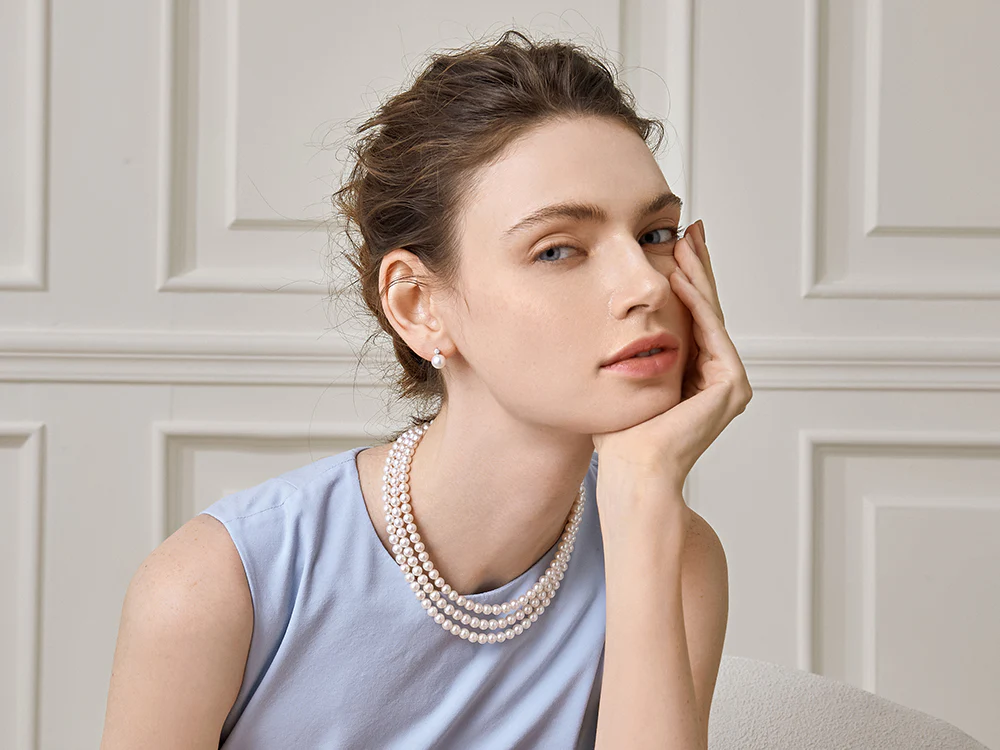
A necklace made of pearls is not a mere gem of jewellery, it is a deep, symbolic, cultural and emotional story thousands of years old and spread over continents. Since ancient times, when they were worn by royalty, pearls have been a symbol of grace, wisdom and eternal beauty. This detailed resource paper will discuss the many layers of symbolic meaning of pearl necklaces, their usage and importance in British and world cultures and how they have evolved in modern society. Whether you are planning to buy a pearl necklace as a present, to be inherited, or just want to know what all these glamorous jewels are all about, the meaning of a pearl necklace only makes your experience of this age-old accessory valuable.
What Does a Pearl Necklace Mean?
There are several levels of symbolic meaning attached to pearl necklaces that have been very constant in terms of cross-cultural and time. It is knowledge of these fundamental associations that can be used to understand why pearls still have such relevance in jewellery and gift-giving culture.
Purity and Innocence
The purity and innocence, especially white and cream-coloured pearls, are the longest-lasting symbolic connection with the pearl necklaces. This is related to the natural luminous nature of the pearl and its clean look that comes out of the ocean depths.
Conventional Bridal Symbolism: Pearl necklaces have been a longstanding bridal jewellery in the Western world. On their wedding day, brides are expected to adorn their bodies with pearls to show purity, new life and the purity of the marriage vow. This has been a strong tradition in weddings in Britain, where pearl necklaces may be used to match traditional bridal wear.
Significance of the Milestone Gifts: Pearls are often presented during important life changes- graduation, coming-of-age parties, and confirmations. The pearl necklace symbolism in these situations can be interpreted as the maintenance of inner purity, but the acceptance of development and new responsibilities.
Romantic and Beauty of Eternity
Pearls are the epitome of restrained opulence and sleek sophistication that cuts across the passage of time and fashion. Pearls do not shine like gemstones and have a low lustre that makes a statement of refinement and moderation.
Traditional, low-profile luxury: The pearl necklace has an air of elegance that does not scream but instead whispers luxury. This aspect renders pearls suitable for almost any formal event. Pearls, as an embodiment of the British culture and especially in Britain, are the epitome of what is known as quiet luxury or, in other words, quality and taste that do not need to be advertised.
Classic Beauty: Pearl necklaces have not gone out of style, as many jewellery designs come in and out of the market. The pearl necklace, as a classic single strand bought today, will be a fashion statement in 50 years to come, and pearls are an investment in timeless beauty.
Wisdom, Growth and Experience
The way in which pearls are naturally formed forms a strong metaphor of how people should grow, be wise and the beauty that develops because of patience and experience.
Natural Formation Symbolism: Pearls are made by putting an irritant into an oyster, which then coats it with layer after layer of nacre over several years. This progressive turn of annoyance to beauty is a great metaphor of the way that hardships and problems may become, over time and with patience, a source of wisdom and beauty.
Beauty by Maturity: Pearls are literally nurtured by time and nature, as compared to gemstones that are mined in their perfect form and shape. This makes them especially suitable icons during birthdays, milestones, and retirement parties. The pearl is a symbol of a well-lived life, in which experiences were made into wisdom and grace.
Pearl Necklaces Have a Long History
The cultural context of pearl necklaces will shed light on why they have such deep cultural significance in the present day. The pearl necklace’s meaning has been influenced over centuries by being associated with power, prestige and cultural value.
Pearls as a Status Symbol
Natural pearls were very rare and expensive, and available only to the richest layers of society, before the advent of cultured pearls in the early 20th century.
Rarity and Value: Natural pearls naturally grow in about every 10,000 wild oysters, and are considered to be one of the most valued rarities on our planet. Such scarcity was extreme, which is why pearl necklaces were a symbol of unbelievable wealth. One strand of ideally matched natural pearls could be valued more than estates or even huge fields of land.
Royal and Aristocratic: Pearl necklaces were worn by monarchs, nobles, and the uppermost members of society throughout the course of European history. Pearl necklaces are a constant feature of British and European royal portraits, making pearls a visual shorthand for royalty and legitimacy. Queen Elizabeth I is especially known due to a large collection of pearls.
The History of Pearl Necklaces in Britain and Europe
The necklaces made of pearls are especially important in the British cultural heritage, as they are always used in formal events and rites.
Tradition of Royal Portraiture: Traditional royal portraiture of the Tudor period to the present day includes pearl necklaces. These were not purely ornamental decisions but conscious symbolic messages regarding continuity, legitimacy and affiliation to royal lineage.
Formal and Ceremonial Clothing: Pearls were now closely associated with formal British events such as state dinners, court presentations, formal balls and ceremonies. The association continues nowadays, and pearl necklaces are still suitable at most official British events.
The Cultural Pearl Necklace: Meaning of the World
Although pearl necklaces have universal connotations of beauty and worth, some cultures have created unique meanings that add to the overall meaning of pearl necklaces.
Western Symbolism
The pearl necklaces in Western culture, especially in Britain and Europe, represent certain feminine concepts and family principles.
Femininity and Grace: Pearls have always been linked to idealized femininity, not the passionate or dramatic, but the graceful, dignified and restrained. In Western cultures, the meaning of a pearl necklace usually includes these attributes, which symbolize a graceful womanhood that cherishes coolness and sophistication.
Heirlooms and Heritage: Western families often bequeath pearl necklaces down the generations, with an emotional and historical value that is far more important than financial. The pearl necklace of a grandmother is a tangible connection to the family’s past, with its stories and memories and its beauty.
Asian Cultural Interpretations
The Asian cultures, especially in China, Japan and South Asia, place other meanings on pearl necklaces which are equally deep.
Peace and Prosperity: Pearls in Chinese culture are associated with good fortune, prosperity and harmony. The circular form is a symbol of wholeness and perfection, and the gleaming surface denotes inner purity that reflects the outer beauty. The pearl necklace’s meaning in these contexts includes wishes to balance, success and harmonious relations.
Emotional Balance and Protection: At times, some Asian cultures consider pearls to have a calming effect that helps to balance emotions and achieve peace of mind. Some cultures hold that pearls provide emotional and spiritual security, and therefore, a pearl necklace is especially important in gift-giving to people venturing into new activities.
Pearl Necklace as a Gift
A pearl necklace is a symbolic, yet highly meaningful gift due to the context under which it is presented, which makes it a highly diverse, but also very meaningful, gift.
Romantic Meaning
Lasting love and Respect: Pearls are a symbol of lasting love based on respect, understanding and mutual values, unlike diamonds, which are a symbol of passionate romance. The pearl necklace can be given as a token of a relationship that is appreciated because of its depth and longevity, and not necessarily its intensity, hence it is always suitable to be given during anniversaries.
Family and Heirloom Meaning
Generational Connection: As the necklace of pearls is handed down to the grandmother, then the mother and then the daughter, it forms a physical connection between generations. Every wearer imparts her own memories and meanings to the piece, adding to its meaning. The pearl necklace definition changes from being an expensive piece of jewellery to a priceless treasure of the family.
Professional/Milestone Gifts
Graduations and Achievements: A pearl necklace as a graduation gift is a recognition of the maturity of a graduate, his hard work, and his willingness to proceed to a new stage of life. The pearl necklace has in it the aspect of acknowledgment of diligence and belief in success in the future.
Anniversaries and Retirement: Pearls are customary gifts on the 30th anniversary of a wedding and retirement parties to show the experience gained through years of work.
Will a Pearl Necklace Change Style Change Its Meaning?
The shape and design of a pearl necklace can carry a subtle impact on its symbolic meaning and the situations in which it can be best worn.
Single-Strand Pearl Necklace
Classic Elegance: One strand of pearls is simple and reserved- the spirit of classical style. This arrangement enables the natural beauty of the pearls to come into the limelight. This form of expression of the pearl necklace meaning is the purest and the most pure form of elegance (that is, the most distilled form), and bears all the traditional connotations of purity, wisdom, and refinement to the greatest extent.
Multiple or Statement Pearl Necklaces
Fancy and Confidence: Statement jewellery with elaborate settings and multi-strand necklaces is more formal and a sign of confidence. The styles imply that the wearer is a boss who is going to be noticed by being there and having something to achieve. The meaning of a pearl necklace alters a bit to power and authority and still retains the elegant meaning, especially when it comes to the most formal events.
Long Pearl Necklaces vs Pearl Chokers
Chokers: current femininity: Pearl chokers, perched at the neck, exude confidence and present-day femininity. The meaning of the pearl necklace in choker form focuses on the personal style and contemporary sensibility.
Long Strands’ Versatility and Drama: Pearls of the necklace-length of an opera or a rope make a visual statement and provide flexibility of style. They are long, doubled or knotted, which implies creativity and confidence in fashion.
Pearl Necklaces in Contemporary Times
The pearl necklace’s meaning has transcended historical borders to the current society, developing new symbolic levels without ignoring the historical relevance.
Pearls in Modern Fashion
Gender-Neutral Fashion: Pearls as accessories are becoming more commonplace in contemporary fashion as a gender-neutral jewelry choice. Pearl necklaces worn by men defy the conventional connotations without losing the pearl oomph. This transformation broadens the meaning of the pearl necklace to include an opportunity to express oneself in a way that is not limited by gender norms.
Personal Identity Statement: Contemporary wearers usually tend to prefer pearls in order to express some values, namely, the admiration of classic quality, affiliation to tradition, or deliberate restraint. The meaning of the pearl necklace is a conscious personal message concerning values and aestheticism.
Emotional and Personal Meaning Nowadays
Self-Confidence Charm: The modern jewelry wearer sees his or her pearl necklace as a talisman of self-confidence–something to wear on significant occasions at presentations, interviews, or other stressful moments. The pearl necklace’s meaning turns out to be personal empowerment.
Self-worth and Status: Contemporary wearers tend to use pearls as a symbol of self-worth and personal accomplishment instead of status. It makes buying your own pearl necklace a sort of self-identification, where the pearl necklace symbolizes individual worth.
Pearl Necklace Slang Meaning (Contextual Elucidation)
It is noteworthy that in some informal internet usage and slang, the term pearl necklace has an unrelated explicit sexual connotation. This is a completely different use of slang which has no relation to nor is related to the jewellery, cultural or symbolic meanings used throughout this article.
Context: in normal UK English and in jewellery, fashion and cultural contexts, the term pearl necklace only describes the item of jewellery. These are not the contexts of the slang meaning.
Conclusion
The significance of the pearl necklace is much more than a pretty necklace; it is the tapestry of cultural, historical, and personal importance and significances that have been changing over the millennia. Since ancient times, when they were associated with purity and wisdom, the necklaces made of pearls have not lost their strong meaning that has been echoing across generations and cultures.
Want to discover the ideal pearl necklace with all these eternal meanings? Find out the fashionable line at Glimma Style, where classicism runs into modern style. Every creation is designed to continue the rich symbolism and timeless beauty that have made pearl necklaces a treasure trove over the centuries.